
A buyer-led framework for selecting footwear, bags and accessories, planning a small test assortment, and requesting a clear multi-category quote.
About this guide: Prepared for Lefuxan with AI assistance and checked against the cited public sources. It is a buyer checklist, not a report of a particular Lefuxan factory visit or shipment. Some editorial visuals are illustrative concepts, not product photos or proof of testing. Product availability, specifications, testing and commercial terms must be confirmed for each inquiry.
A multi-category fashion order can create a coherent store story, or it can become a collection of unrelated samples with no clear reason to reorder. The difference is usually the buying brief. Before asking for prices across shoes, bags, watches, accessories and apparel, decide who will buy the range, how the categories work together and what you need to learn from the first order.
This guide helps a boutique buyer or importer build a test assortment and send a supplier an inquiry that can be answered accurately. It focuses on decisions the buyer controls: selection, quantities, product information and review criteria. It does not imply that all categories come from one factory, share a minimum quantity or can be combined under identical commercial terms. Those questions need order-specific confirmation.
Begin with a customer, not a list of categories
Describe the store customer in practical terms: budget, occasion, climate, style preferences and likely purchase frequency. A commuter range might start with comfortable footwear and a functional bag, with a watch or small accessory as an add-on. A vacation range might prioritize light clothing, easy footwear and compact accessories. The same categories can serve very different customers, so a category name alone is not a strategy.
Give the assortment one working sentence. For example: “A compact, neutral travel wardrobe for customers who value easy care and versatile styling.” This is a hypothetical brief, not a claim about Lefuxan's current products. It helps reject attractive items that do not serve the intended range. The question is not “Do we like this product?” but “What job does it do for this customer, at this price, beside these other items?”
Define your intended retail price bands and margins before falling in love with a hero image. A product may appear to fit visually but leave too little room for freight, duties, taxes, returns and marketing. Because those costs vary by market and shipping arrangement, calculate them from your own current data rather than relying on a generic margin promise.
Give each category a commercial role
Core items are the products you expect to sell repeatedly. Statement items help communicate the store's point of view but may sell in smaller numbers. Add-ons can increase basket value if they truly complement the core item. A test assortment should say which role each product plays, since buying every style at the same depth often creates excess stock in the wrong places.
For example, a shoe style can anchor a look, while a bag provides a complementary silhouette and color. A small accessory may offer a lower-ticket purchase or gift option. But a watch, piece of jewelry and garment each bring their own sizing, material, regulatory and after-sales questions. Adding a category should be justified by the customer and operational capability, not just by an available catalog page.
Make a simple range map with product category, target customer, intended use, color family, retail price band and expected quantity. Mark the dependencies: does the shoe need a matching bag, or is a looser palette enough? Are you buying a coordinated outfit or several standalone items? This makes the assortment flexible when a sample fails or a style is unavailable.

Keep the first test range deliberately small
A test order should answer a few specific questions. Which silhouette attracts customers? Which size distribution is right? Which material feels acceptable at the intended retail price? A huge assortment makes these answers harder to interpret. Choose enough variety to compare meaningful alternatives, but not so much that each option receives only a token quantity.
Depth matters differently across categories. Footwear and apparel need size planning. Bags and many accessories do not, but may have higher variation in color and finish. Watches and jewelry can bring additional product-information and service requirements. Budget for the operational work each new category adds, not just the buying cost.
For a hypothetical small boutique, a disciplined test might compare two footwear silhouettes, two bag forms and one add-on family in a narrow color palette. That is an example of range structure, not an MOQ recommendation. The actual quantities depend on supplier terms, your cash budget, size curve and expected sell-through. Ask whether a supplier can quote the selected mix and whether each style or color has its own minimum.
Keep a reserve for the second decision. If the first drop reveals a strong product, the ability to reorder or adjust colors can be more valuable than spending every available unit of budget on untested variants. Ask early about repeat-order conditions, but do not assume the same price or lead time will apply later.
Compare products at the right level of detail
Do not evaluate every category with the same checklist. Footwear needs a style-specific size chart, fit review, construction description and outsole questions. Bags need material, dimensions, lining, hardware and strap checks. Watches need movement, case, strap, battery or charging information, water-resistance wording and service expectations appropriate to the actual model. Apparel needs fabric composition, measurements, size grading, care instructions and construction review. Jewelry and other accessories require their own material, component and destination-market checks.
The common framework is still useful: identify the exact style; describe its materials and function; approve a sample; define the acceptable variation; and understand packaging and labeling. A catalog photo can start that process but cannot finish it. Use a separate specification sheet per style, then a range-level sheet to track how the styles combine.
Be especially careful with claims copied from a supplier listing. “Waterproof,” “hypoallergenic,” “genuine leather,” “recycled” and “nickel free” may require definitions and evidence. Do not publish them to customers until the evidence matches the actual product and destination market. If a test is needed, agree on the relevant standard with a qualified laboratory or compliance adviser. A general online guide cannot certify your assortment.
Use color and proportion to connect the range
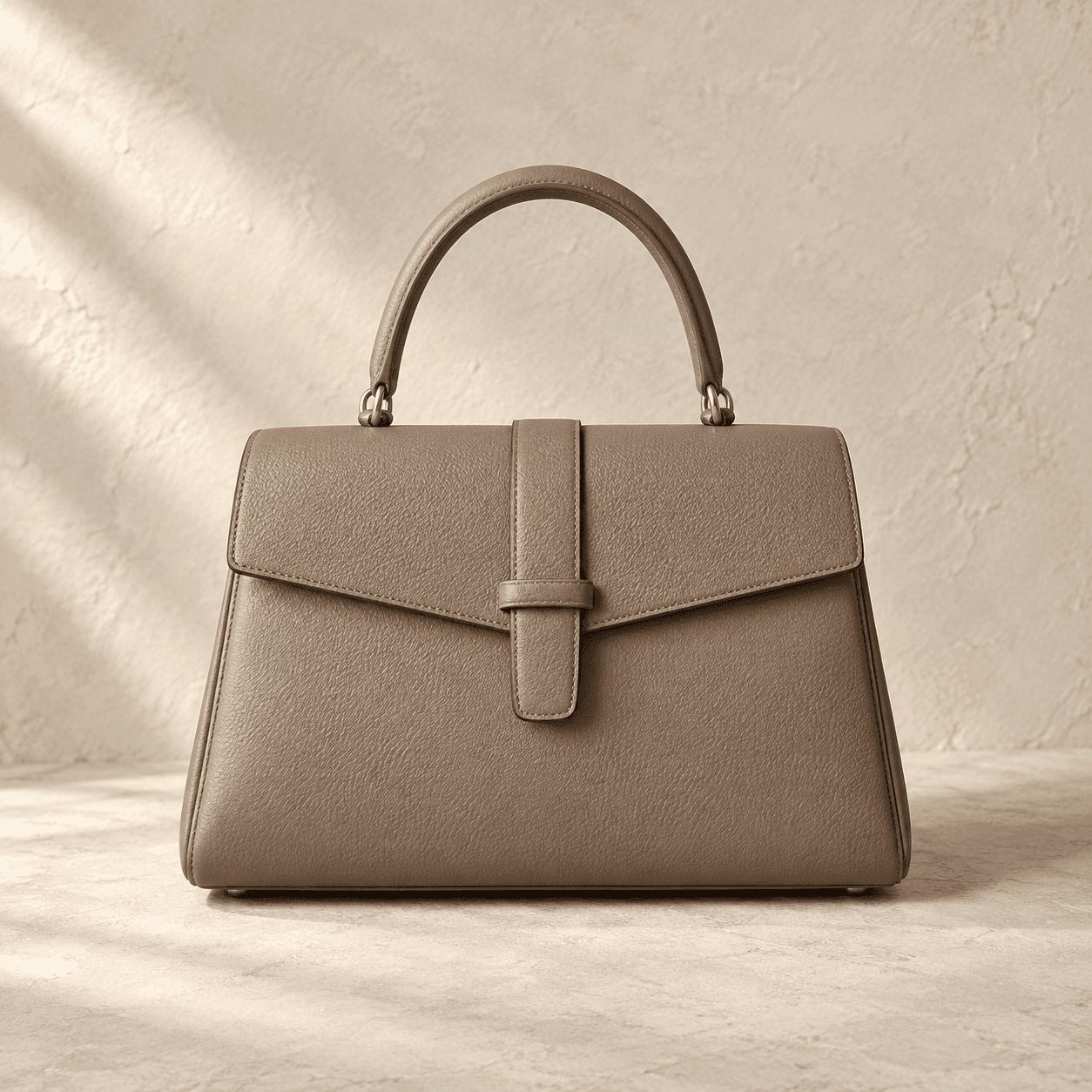
A coherent assortment does not require identical colors across categories. Start with a base palette and one or two accents that suit the target customer. Photograph or view physical samples together under consistent light. Screens and supplier photographs can shift warmth, saturation and texture, so an exact match should be confirmed with swatches or approved samples when it matters.
Think about proportion, too. A bulky shoe and oversized bag can create a deliberately bold look, but perhaps not the understated range you intended. A small structured bag may pair well with a simple shoe while being impractical for a customer who carries a laptop. Let the customer use case lead, then use visual styling to make the range legible.
Treat product images on a wholesale site as selection aids. Some editorial images show styling concepts rather than the exact item available for ordering. In your assortment sheet, link each intended purchase to a real style identifier and actual product photographs. If a visual cannot be tied to a specific available item, keep it in the inspiration section rather than the purchase list.
Build a quote request that suppliers can answer
A multi-category quote becomes difficult when one email mixes inspirations, exact styles and open-ended customization without separating them. Send a clear request with a summary of your business and market, followed by one line per product. For each line, include the style identifier or image, desired color, size assortment where relevant, estimated quantity, packaging, target timing and any non-negotiable material or labeling requirement.
Ask the supplier to reply line by line with availability, product specification, unit price, minimum quantity, sample conditions and lead time. Request that they identify which information is confirmed and which depends on a sample or production review. If a style is unavailable, invite an alternative with its own photo and specification rather than quietly substituting a similar item.
Make the commercial basis explicit: currency, payment terms, quotation validity and delivery rule with a named place. The ICC Incoterms checklist (listed under Sources and further reading) can help you frame delivery responsibilities. A quote based on one rule cannot be compared directly with a quote based on another unless freight, insurance and risk are accounted for. Incoterms do not settle ownership, payment or quality disputes by themselves.
If you want combined shipping, ask whether the goods can be consolidated and how that changes packing, timing and documentation. Different categories may finish production on different dates, and a combined dispatch may wait for the last item. Compare the value of consolidation against any delay to your selling season.
One inquiry can cover several categories, but each product still needs its own style, quantity and specification line.
Browse the shoe, bag and watch collections, then send a single inquiry listing the styles you want to compare. You do not need to know every answer yet; say which decisions still need samples.
Protect the launch calendar
Work backward from the date goods need to be ready for customers. Allow time for selection, samples, revisions, testing if required, production, inspection, transport, customs and photography. Each stage can affect the next. A range is not ready for a launch simply because a supplier has quoted a production time; that may not include earlier approvals or later transit.
Create a decision deadline for each product. If a bag sample needs a change, does that delay only the bag or the whole consolidated shipment? If an apparel size chart is late, can the footwear still launch? A simple dependency map lets you decide whether to split the order, use a substitute or change the campaign date without guessing.
Be precise about what happens when a product fails review. Rejecting one style should not silently alter the economics of the others. Ask whether the quoted prices depend on a combined quantity. This is especially relevant when a supplier aggregates order value across categories or when shipping costs were estimated for a specific mix.
Inspect at both product and assortment level
Product-level inspection compares each style to its approved specification. Range-level review checks whether the entire order contains the correct assortment, size curve, color distribution, labels and carton marks. A shipment can contain well-made individual items but still be commercially wrong because the size ratios or color quantities differ from the purchase order.
For any formal sampling plan, define lots and defect classes before inspection. The ISO 28590 introduction (listed under Sources and further reading) provides context for attribute-sampling standards, but the actual plan should be selected with a qualified inspector. Where categories have distinct risks, do not hide them in one undifferentiated overall pass rate. Record which style and carton produced each defect.
On receipt, reconcile cartons and product lines with the packing list. Check a spread of sizes and colors, photograph transit damage and separate unsellable stock promptly. Feed findings into the next purchasing cycle. The best outcome of a test assortment is not merely a sales number; it is better information about what to buy again, change or drop.
A worked example: editing a proposed test range
Suppose a hypothetical boutique plans a neutral travel capsule. Its first list contains four footwear styles, five bags, three watch styles and several accessories. The collection looks varied, but the cash budget would leave only a small quantity of each footwear size and no reserve for a repeat order. The buyer returns to the customer brief and chooses two footwear silhouettes, two bag forms and one optional accessory family instead.
Each retained style receives a job: one shoe is the everyday anchor, another is a dressier alternative, one bag serves daily carry and the second offers a smaller occasion option. The buyer requests specifications and samples for those products, not for every item in the inspiration folder. The inquiry separates confirmed style codes from reference images and asks whether any minimum quantities or shipment dates depend on the combined order.
This example is not a Lefuxan customer case or an MOQ recommendation. Its purpose is to show how a buyer can reduce complexity while increasing the quality of the information learned. If early sales favor one shoe and one bag, the second purchase can go deeper in the proven combination rather than repeating the entire first range.

Frequently asked questions
Should a first wholesale order include many categories?
Only if the categories serve one identifiable customer and your team can review and sell each one properly. A narrower, well-documented test often teaches more than a broad assortment with too few units per style. The right range depends on your channel, budget and customer evidence.
Can I negotiate one MOQ across different product categories?
You can ask, but do not assume it. Minimum quantities may be set per style, color, material or production source. Ask for a line-by-line quote and written explanation of any combined-order condition.
What should I include in a multi-category inquiry?
Provide your destination market, target customer, desired delivery window and one row per requested style with color, quantity, size curve where relevant and open questions. State whether you need existing catalog goods, modifications or new development.
Are catalog photos enough to build the final range?
They are enough to shortlist. Samples, component information, dimensions, fit and current availability are needed before final approval. Styling images should never be confused with confirmed order lines.
How do I compare quotes with different delivery terms?
Put every quotation on a common cost basis, including the named Incoterms rule, freight, insurance and other relevant landed-cost elements. Your forwarder or customs adviser can help with market-specific charges. Compare product specifications as well as price.
The practical conclusion
A multi-category order works best when the customer, product roles and learning goal are explicit. Choose a small coherent range, document each style separately, request comparable line-item quotes and keep enough time for sample review. Then inspect both individual quality and the order mix before shipment and on arrival.
If you are building a test range, begin with the Lefuxan collections and send your chosen styles and market requirements. We can discuss current product information and quotation conditions without assuming one fixed MOQ, lead time or specification applies to all categories.
Sources and further reading
Ready to compare actual styles?
Choose products from the collection and send your target market, quantities and requirements. We can then discuss current availability and quotation details.
Send your requirements ↗